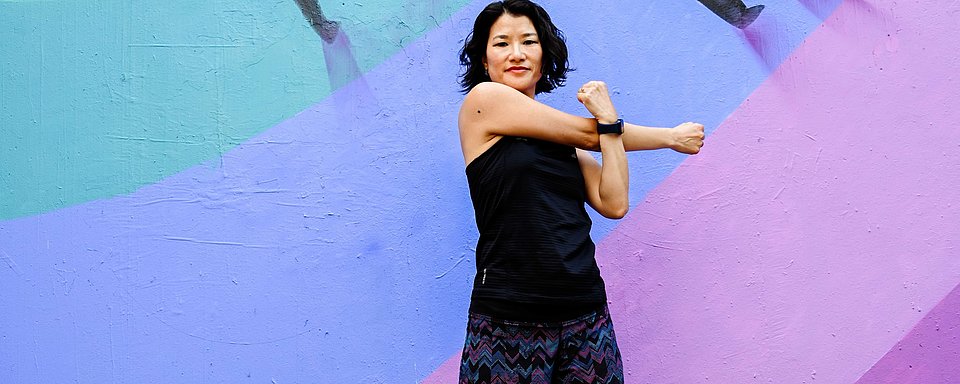
Barc 박 (BiPoC Adoptees Running Collective) is a growing initiative creating space for transracially adopted BIPoC to connect, feel seen, and heal—through running, hiking, walking, and moving together.
Why are you part of the OUTO Changemaker program?
I’m here to explore how Barc 박 (BiPoC Adoptees Running Collective) can grow from my
project Run Towards My Family into a global movement of transracial adoptees connecting
through sport, outdoor activities, social justice, and healing. I need support to create spaces
where we can imagine and shape our own identities and destinies.
1. What do you offer?
Barc 박 (BiPoC Adoptees Running Collective) is still in the making. It will be a collective
where transracially adopted people of color can come together through running—and maybe
hiking, walking, and other ways of moving—to feel less alone, building connection, visibility,
and healing spaces.
2. Why did you start your organization or initiative?
In my long-term artivist project Run Towards My Family, I run global marathons to raise
awareness of South Korean families who were separated—often forcibly—by transnational
adoption. Running helped me reconnect with my body and history, and Barc 박 grows from
that work, creating space for other adoptees of color to find healing and connection through
movement.
3. What do you want to achieve with your organization or idea?
I imagine Barc 박 as a global network that reaches across borders, race, and age. Sport has
supported my own healing and confidence as a survivor of adoption, as well as an artist,
athlete, and activist. I want to share that journey with others, creating spaces where we can
move, learn, and grow together.
4. What does a more equitable outdoor scene mean to you?
For me, equity means seeing more people like me: women, nonbinary people, and adopted
people of color in visible leadership roles, not just doing the work in the background. Too
Mirae kh RHEE
Barc 박 (BiPoC Adoptees Running Collective)
often our labor goes unrecognized; equity means being seen, heard, and explicitly invited to
the table.
5. Why do we need to make nature more accessible to BIPoC?
BIPoC have always had deep connections with nature, often stereotyped as being “closer” to
it. The real issue is that white, Western norms have been canonized as the “correct” way to do
outdoor sports, while our own ways of relating to the land have been erased or devalued. For
adoptees like me, that separation is even deeper, we were displaced not only from our families
but also from ancestral landscapes and practices. Making nature accessible means reclaiming
those connections and redefining outdoor culture through education and empowerment.
6. What specifically do you want from the outdoor community and society to enable genuine
participation and safe spaces for BIPoC?
First, we need real recognition of the trauma of family and cultural separation, and of the
outdoors as a place for healing. We need love, support, and the freedom to create our own
ways of being in nature without the imposition of white mainstream norms. Ultimately,
funding and a global platform to give us visibility and legitimization are necessary.
7. Which (outdoor) role models or movements have inspired you?
I’m inspired by Detroit Summer’s reclaiming abandoned urban land for gardening project
made possible by Grace Lee Boggs @grace_lee_boggs; the movement of Native Women Run
@native_women_run; and two outdoor dance groups, San Diego @ajummaexp and Chicago
@ajumma_rising —where middle-aged Korean American women do flashmobs in full
ajumma style.
8. What are your hopes for the OUTO Changemaker Program?
I want to figure out how Barc 박 fits into Run Towards My Family and how it can grow from
an individual project into a global collective. My hope is for it to develop organically and
non-hierarchically, starting in Korean adoptee spaces and eventually expanding into wider
BiPoC adopted networks.
9. What motivates you most about participating in the OUTO Changemaker Program?
Being held accountable, learning from others, and supporting each other along the way. I am
looking forward to meeting my cohort in person during our Munich meeting in November
10. What advice would you give to others who want to promote a more inclusive outdoor
scene?
Give to the community first without expecting anything in return.
11. Complete the sentence: Nature means to me...
Nature means being in harmony: not harming, not taking what you cannot give back, and
respecting the connection humans share with all forms of life.
Mirae kh RHEE
Barc 박 (BiPoC Adoptees Running Collective)
Social media: IG @runtowardsmyfamily @runtowardsmyfamily_korean
Website: www.runtowardsmyfamily.com
LinkedIn: www.linkedin.com/in/mirae-kh-rhee
Other links: IG @mirae.kr.rhee
www.mirae-kh.rhee.com
Foto Credits: @Omou Aidara